
Simon Says: Inconspicuous Evidence of Eyewitnesses in Mark
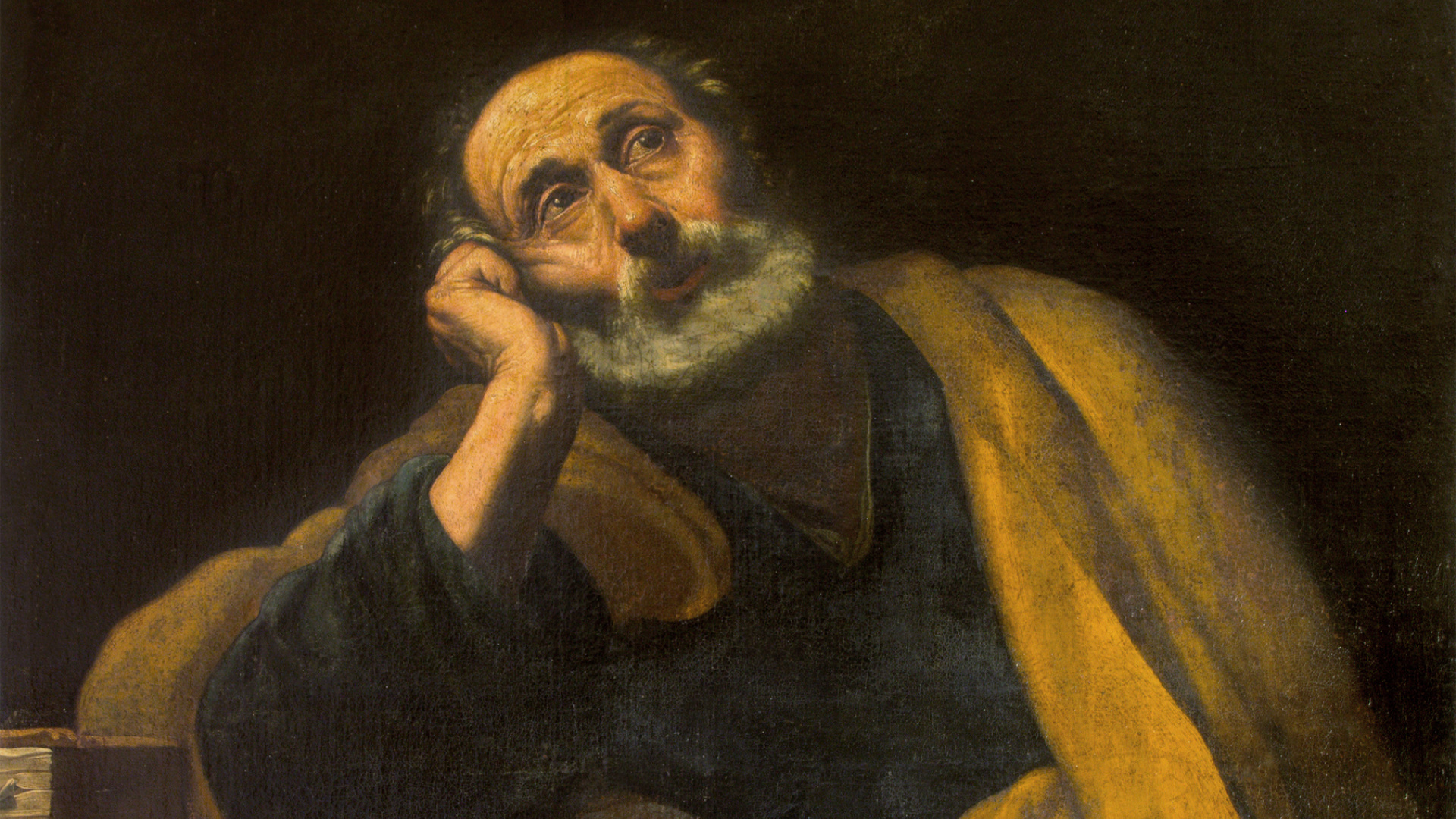
When I watch Jesus films, whether the current series The Chosen, The Passion of the Christ in the early 2000s, or even Godspell from the 1970s, I can’t help but ask, Where did they get those stories? Sometimes I can piece together bits from Matthew, Mark, Luke, or John. Occasionally I detect legendary material from church history or the apocryphal gospels. But at other times, my best guess is “They made it up,” and I ascribe the scene to creative liberty.
When we turn to the Gospel of Mark, which most scholars see as the first extant telling of the story of Jesus, we might also wonder, Where did Mark get these stories?
Around the 1920s to ’50s, the fashionable scholarly answer was found in a field of study known as form criticism. This enterprise tried to tie different sayings and stories of Jesus back to an occasion within the early church that would have prompted their creation. Though the heyday of form criticism has passed, the legacy of seeing the Gospels as a “mixtape” of various ad hoc literary traditions can still be seen today.
In contrast to form criticism and the Jesus-film industry, the canonical Gospels are sourced in eye-witness testimony and were written within living memory of the events they describe. Perhaps no other scholar has written so persuasively on this subject as Richard Bauckham in his magisterial Jesus and the Eyewitnesses.
Indications of eye-witness testimony are peppered throughout Mark’s gospel. Here we will consider just a few, each revolving around the name “Simon.” These are more obscure than what normally make their way into works on apologetics, but their subtlety is a strength since they are not the kind of details one fabricates.
We will discover that inconspicuous indicators of eyewitnesses reveal what is happening behind the scenes more than front-and-center observations.
Evidence of Simon Peter
There are signs that Simon Peter has been a significant source for Mark’s Gospel, despite Mark not making a show of it. The church father Papias famously stated that Mark was Peter’s interpreter, who wrote down what he remembered from his preaching. Though many scholars doubt Papias here, Mark goes out of his way to emphasize Simon Peter. Several features indicate that Mark is particularly told from a Petrine perspective.
For example, his prominence verges on redundancy when he is introduced in 1:16: “Passing alongside the Sea of Galilee, [Jesus] saw Simon and Andrew the brother of Simon casting a net into the sea, for they were fishermen.” This is part of what Bauckham calls a Peter inclusio, so that his testimony brackets the Gospel of Mark (see 16:7).
Later in the narrative, those “sick or oppressed by demons” are brought to Jesus in Capernaum (1:32), the summary after the climactic exorcism at the synagogue (vv. 21–28). But sandwiched in the middle is the healing of Simon’s mother-in-law (vv. 29–31).
Similarly, Mark writes of when the disciples look for Jesus, “Simon and those who were with him searched for him” (v. 36). Details like these betray a “Simon-centric” source. Bauckham argues that, with few exceptions, “Peter is act…
Read the full story at The Gospel Coalition
ChristianLens shows the opening half of the story. The rest, plus images and any updates, live on The Gospel Coalition’s own website.
Open the original article